A new client says yes, and the details begin arriving in pieces. The door instructions are in one text. The feeding routine is in another. The veterinary number is somewhere in the first conversation, and a note from the meet-and-greet is still sitting in your notebook.
By the first visit, you may be holding the whole handoff together with memory and good intentions. That can work until a key is hard to find, a routine changes, or you need a contact quickly.
Clear pet sitter client forms give each part of the booking a home. The same small set can support a pet sitter, a dog walker, or a small team without turning every new client into a brand-new system.
Why scattered notes cause handoff problems
Handoff problems usually come from information living in too many places: a calendar, several text threads, a note by the door, and someone's memory of a conversation from two weeks ago.
When everything is scattered, small details slip. Which bowl belongs to the sensitive eater? Where is the carrier? Which rooms stay closed? When is the next agreed visit? None of these details feels complicated on its own. The problem is finding the right answer when you need it.
A short set of pet sitting forms lets you check instead of guess. It also gives the owner a clear way to review what you recorded before care begins.
The six forms every booking should start with
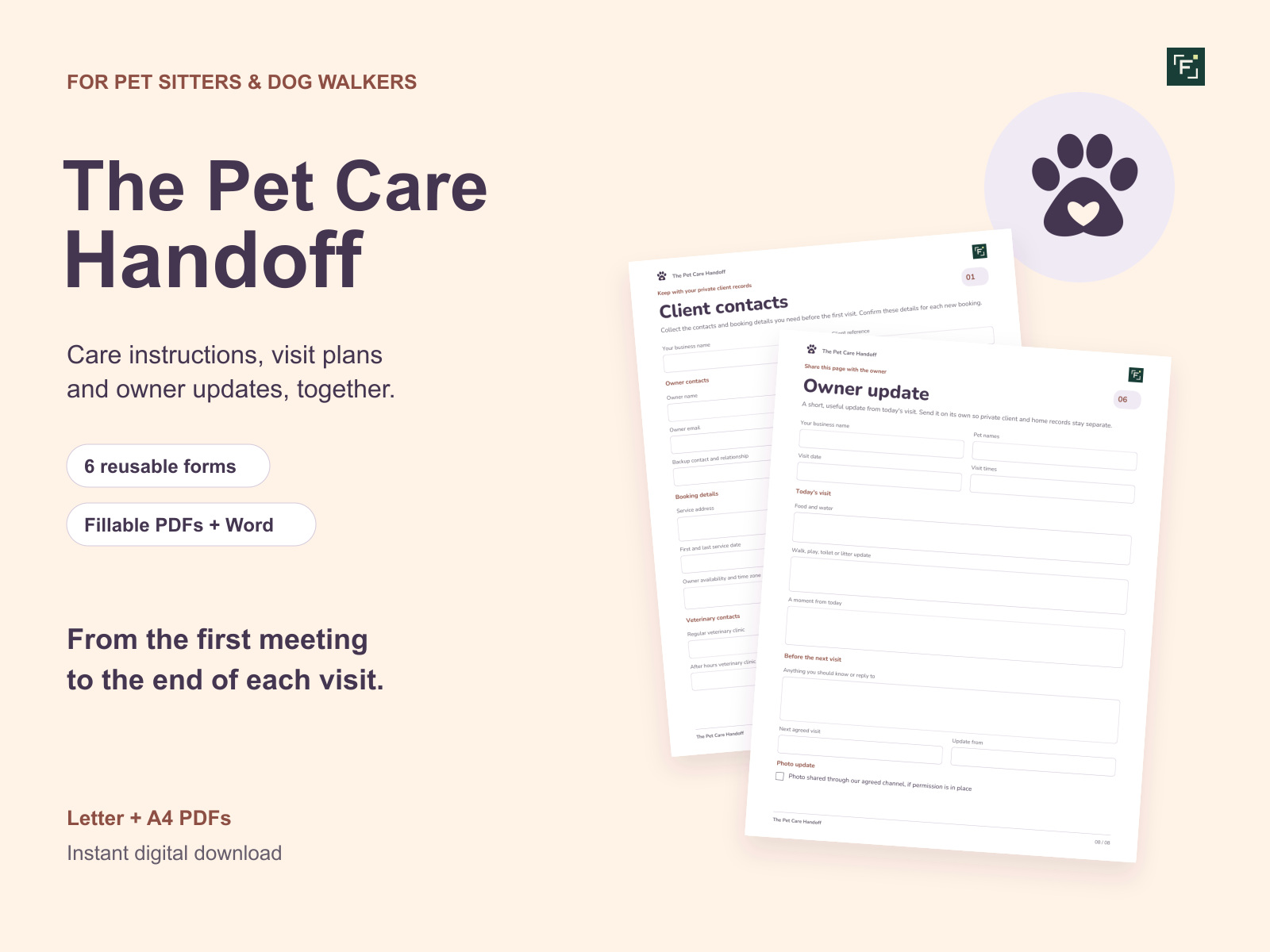
01 Client and emergency contacts
What it captures. The owner's name, phone number, email, preferred update channel and frequency, plus a backup contact. It also records the service address, booking dates, pets included, the regular veterinary clinic, and the after-hours clinic.
When to complete it. Before the first visit, ideally during or directly after the meet-and-greet. Confirm every phone number and review it whenever a client's contact details or clinic changes.
Why it helps. When you need a contact, you should not have to search an old message thread. One client-contact page gives you a clear place to start while keeping the information with your private client records.
02 Pet care profile and routine
What it captures. Complete one profile per pet. Record food amounts and meal times, water routines, walk or exercise needs, toilet or litter routines, resting places, handling notes, known triggers, situations to avoid, and any additional care the owner reports.
When to complete it. Fill it out with the owner before care begins and review it whenever the routine changes. Use the profile to point to the owner's current written care instructions.
Why it helps. A written profile keeps the everyday routine from depending on memory. Keep medication instructions and veterinary authorizations separate so those current documents stay with the owner's agreed care plan.
03 Home access and safety handoff
What it captures. The key or access-item handover and return arrangement, entry, parking and exit instructions, permitted areas, closed doors, pet boundaries, and where leads, carriers, food, litter, and cleaning supplies are kept. It can also include a walkthrough checklist.
When to complete it. Walk through the home with the owner before your first solo visit. Test the agreed entry and exit method and confirm how the key or access item will be returned.
Why it helps. A clear home handoff reduces last-minute questions and keeps private details in the right place. Do not write security codes on a general form; share them through the private method you and the owner agree to use.
04 Visit plan
What it captures. The booking dates and time zone, then each visit's date, arrival window, expected length, and agreed tasks or pet routine. It also gives you space for priorities, changes, and visits that still need confirmation.
When to complete it. Once the booking is confirmed, then review it with the owner before the first visit. Update the written plan when the agreed schedule changes.
Why it helps. Both sides can see what was agreed. That makes it easier to notice a missing visit, an unclear time window, or a task that still needs an answer before the booking starts.
05 Visit record
What it captures. The visit date, arrival and departure times, sitter name, completed tasks, observations, anything different from the usual routine, and any follow-up that is still needed. A final checklist can cover the pets, the home, and the owner update.
When to complete it. During or directly after each visit while the details are fresh.
Why it helps. The record gives the next visit a clear starting point. It is especially useful when more than one sitter is involved or when several days of care need to stay consistent.
06 Owner update
What it captures. A separate, shareable summary with food and water, walk or play, toilet or litter care, a moment from the visit, anything the owner should know or reply to, and the next agreed visit. It can also include a photo check when permission is in place.
When to complete it. After each visit or at the frequency you agreed with the owner.
Why it helps. The owner receives the useful visit details without receiving your private contact, access, or home notes. Keeping the update separate makes that boundary simple.
Emergency snapshot or complete client handoff?
An emergency snapshot is a one-page reference for details someone may need quickly: pet and owner information, backup and veterinary contacts, health essentials, agreed first steps, and where to find the carrier, care instructions, and separate written authorization.
A complete client handoff covers the full booking: contacts, routines, home access, visit planning, visit records, and owner updates. The two tools do different jobs, and they work well together.
Read what to put in a pet care emergency sheet for a field-by-field guide.
FREE / FILLABLE / LETTER + A4
Start with the free emergency snapshot.
Get the Pet Care Emergency Snapshot for owner contacts, veterinary details, health essentials, agreed first steps, and the location of key care documents. Enter your email; the fillable US Letter and A4 PDFs will arrive right away.
Already subscribed? Get the free sheet on Payhip ↗
FOR PET SITTERS & DOG WALKERS
Start every booking with the same six forms.
The Pet Care Handoff includes six reusable forms, two complete fillable PDF packets in US Letter and A4, two standalone Owner Update PDFs, an editable Word document, three adaptable client messages, a start guide, and a single-business licence. It costs US$9.
These are manual organization tools. They do not book visits, send reminders, provide contracts, or replace veterinary authorizations or treatment instructions.
See The Pet Care Handoff